

Nairobi Property Hotspots: Follow the Roads — The Infrastructure Projects Quietly Deciding What’s Next
From a new JKIA terminal to the Rironi–Mau Summit highway and Railway City, the first half of 2026 was thick with groundwork. Map the concrete, and you can see where property demand goes next.
Table of Contents
In real estate, the roads come first when it comes to Nairobi property hotspots. Prices follow tarmac, rail and runways — usually years behind the bulldozers, occasionally years ahead of them on rumour alone. The first half of 2026 gave Kenya an unusually rich set of signals: as of April, the country had 51 public-private partnership projects on the books — ten under implementation and 41 in development — alongside direct government works across transport, aviation and urban regeneration. Here is how we read the map.
Five moves that matter
1. JKIA finally gets its terminal — and an Airport City around it
The Kenya Airports Authority advanced procurement of a new passenger terminal at Jomo Kenyatta International Airport, with the contract award announced in June 2026, alongside a signed USD 1.2 billion (≈KES 156 billion, indicative at KES 130/USD) agreement for the airport’s expansion and modernisation. In parallel, plans for a proposed Airport City around JKIA gained momentum — commercial offices, hotels, logistics parks, conference facilities and residential development serving airport-linked businesses. With Ethiopia commencing a USD 12.5 billion mega airport, the regional race raises the stakes — and the likelihood Kenya follows through.
2. The road west: Rironi–Mau Summit and a bigger Waiyaki Way
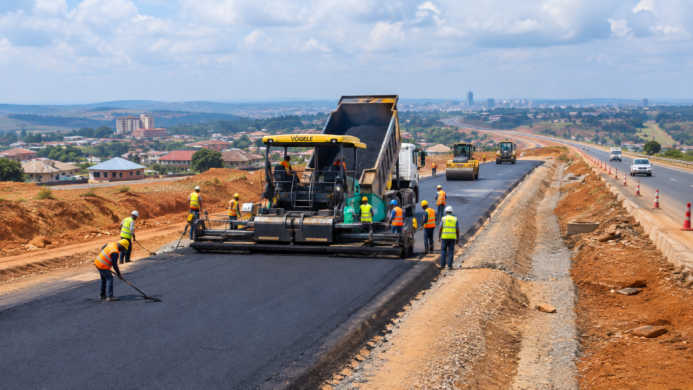
The proposed Rironi–Mau Summit highway — a tolled road at approximately KES 8 per kilometre, expected operational from 2029 — anchors the Northern Corridor upgrade, and government has prioritised expanding Waiyaki Way from James Gichuru to Rironi to unclog the approach. Every kilometre of that work shortens the effective distance between Nairobi and the Limuru–Tilisi belt.
We’re already seeing this show up in enquiries: interest in Tilisi and Limuru land has picked up noticeably this year, well ahead of any highway opening — buyers are pricing in the road, not waiting for it.
3. Upper Hill’s second act
The KES 2.99 billion Upper Hill Viaduct, resumed in 2025 after long delays, has passed its halfway mark and is expected complete in 2027, easing circulation between Upper Hill and the CBD. It lands just as government concentrates institutions there: the Treasury’s planned KES 2.5 billion Jubilee House acquisition nearby, a proposed Judiciary headquarters, an approved Supreme Court complex, Waajiri House underway and two acres allocated for a new institutional headquarters.
4. The southwest unlocks: Ngong Road flyover and the Suswa link
The KES 3.8 billion Ngong Road–Naivasha Road flyover is complete, and the 70-kilometre Ngong–Suswa road has opened — enhancing connectivity across the western metropolitan corridor and offering an alternative to the congested Mai Mahiu route.
5. Railway City and the Bomas convention bet
Kenya Railways signed a lease with Zaria Group to develop an indoor arena and entertainment district — a first concrete milestone in the wider Railway City masterplan for mixed-use regeneration around Nairobi’s central transport hub. South of town, the KES 41.9 billion Bomas International Convention Centre progressed toward expected completion in the second half of 2026, with capacity for roughly 11,000 delegates — infrastructure that feeds hotels, serviced apartments and mixed-use demand around it.
For the long view, note the 243-kilometre Mau Summit–Eldoret–Malaba Expressway, whose AIIB-funded feasibility study commenced during the half — a Nairobi–Uganda flagship that would reshape the Nakuru, Eldoret and Malaba growth corridor in the 2030s.
The Nairobi property hotspots map
Tilisi & Limuru — the full stack
Few corridors collect as many signals at once: the highway works west, Tilisi’s Special Economic Zone status, over 200 IFC EDGE-certified green homes at Muzi Salama nearing completion, ALP’s newly delivered Kivu Warehouses at ALP West, and the 32,300 sq. ft. Maisha Mall in the retail pipeline for 2027. Live, work, shop, warehouse — the components of a self-sustaining node are assembling while pricing remains early-cycle.
Westlands & Riverside — the deep-liquidity prime bet
Four of the eight prime office projects in Knight Frank’s pipeline sit in Westlands (Mwanzi Square, ICEA II, the SIB headquarters — plus the just-completed Fadaq Park), with Nexus in Riverside and Hookwood Square adding 60,000 sq. ft. of retail in 2027. Prime money keeps choosing the same postcode; for buyers who prize liquidity and depth of demand over discovery upside, this remains the answer.
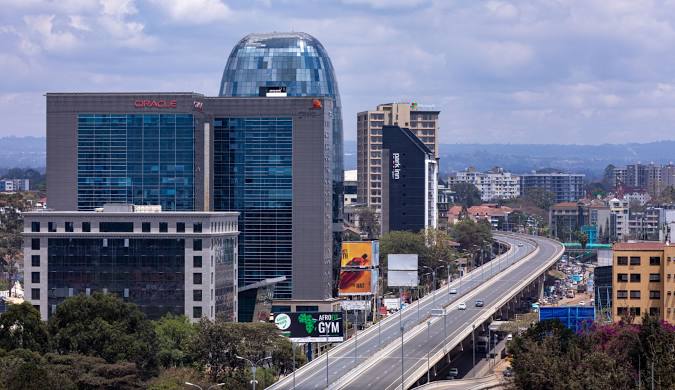
Living in Westlands, Nairobi: The Complete 2026…
Upper Hill — the institutional anchor
The viaduct plus the government cluster gives Upper Hill something rare: an occupier base that does not cycle with the economy. The 60,000 sq. ft. Elgon Mall (2026) adds street-level amenity the district has lacked. Watch rental demand from institutions and their staff.
Runda & the Two Rivers corridor — the diplomatic north
Vantage Point at Two Rivers — at 423,810 sq. ft. the largest project in the office pipeline (2028) — and TRIFIC’s SEZ-based, REIT-funded build-out signal sustained institutional investment in the north, layered on Gigiri’s diplomatic anchor and continued UN-related plans. Premium residential demand follows this kind of money.
Nairobi Property Hotspots: Follow the Roads —…
Karen and the Ngong–Dagoretti belt — amenity and value
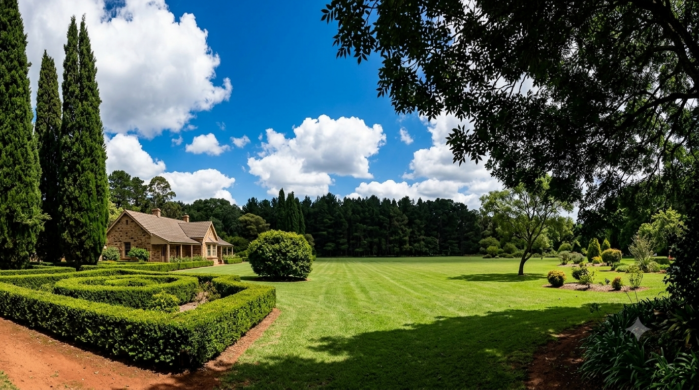
Karen’s Galleria Mall completed a 100,000 sq. ft. expansion in the half, while the finished flyover and Suswa link improve the whole southwestern approach; the 323,000 sq. ft. Talanta Mall planned for Dagoretti in 2029 is a large bet on where that population is heading. Amenity-led prime in Karen; patient value along the corridor.
Living in Karen, Nairobi in 2026: The…
The policy layer most buyers miss
Two H1 2026 developments will quietly shape values more than any single road. First, the Nairobi City County Assembly passed the Development Control Policy, 2026 — a comprehensive framework for planning approvals, zoning and enforcement intended to fix inconsistent decisions and non-compliant developments. If implemented well, it means more planning certainty and fewer rogue projects next door to your investment. Second, a High Court ruling allowed a high-rise mixed-use development in Lavington to proceed — reaffirming the densification of Nairobi’s prime low-density suburbs. If you own a standalone home on a large plot, that is redevelopment value accruing; if you are buying one to live in, check the zoning trajectory around you first.
One more, for landlords: the Finance Bill 2026 raised the residential rental income tax rate from 7.5% back to 10% of gross rental income, alongside a push to register landlords on KRA’s eTIMS platform. Model it into your yields honestly.
How to play an infrastructure cycle
Buy before the ribbon-cutting, not after — value tends to front-load as completion becomes certain. But grade each project honestly: feasibility study ≠ financed ≠ under construction ≠ open.
Match the project to your horizon: completed works (the flyover, Suswa road) reprice now; under-construction and contract-awarded projects (viaduct, Bomas, JKIA terminal) are 1–3 year stories; tolled highways due 2029 and feasibility-stage expressways are land-banking horizons.
Tolls cut both ways: at roughly KES 8 per kilometre, the Rironi–Mau Summit road changes commuting economics — run the math for the household you expect to sell or let to.
Off the beaten path, due diligence gets heavier, not lighter: clean title, verified acreage, and access easements matter most exactly where the upside is largest.
The bottom line
Infrastructure is the closest thing Kenyan property has to a leading indicator, and H1 2026 delivered an unusually legible map of Nairobi property hotspots: west toward Tilisi and Limuru, up through Westlands and the diplomatic north, a state-anchored Upper Hill, and a southwest finally getting its connections. The projects will not all land on schedule — they never do — but the direction of travel is set, and the best entry prices are always found before consensus.