

Nairobi’s Prime Residential Squeeze: Prices Up 6.2% in Six Months — What Buyers Should Do Now
Prime Nairobi home prices rose 6.2% in six months as quality supply tightened. The H1 2026 data — and what it means for buyers, sellers and investors regarding Nairobi property prices 2026.
Table of Contents
If you have been house-hunting in Westlands, Kilimani or Lavington this year, you have probably felt it before seeing any statistics: the good homes go fast, and they do not go cheap. Knight Frank’s Kenya Market Update for the first half of 2026 puts numbers to that feeling — and the numbers are striking.
As we look ahead, understanding Nairobi property prices 2026 will be crucial for making informed decisions.
Prime residential sale prices in Nairobi rose 6.2% in just the six months to June 2026, while prime monthly rents edged up 0.73%. For context, that price growth in half a year comfortably outpaces inflation, which stood at 6.7% for the full twelve months to June. Quality homes are appreciating in real terms.
Understanding Nairobi Property Prices 2026
Knight Frank attributes the rise to a continued shortage of quality prime housing stock — particularly bungalows, villas, townhouses and maisonettes — amid sustained demand from both owner-occupiers and renters. In plain terms: the family-sized, well-built home in a good neighbourhood is the scarcest product in this market.
And the pipeline is thinning, not thickening. The value of residential building plans approved in Nairobi fell roughly 10% year-on-year in the first quarter of 2026, from KES 45.7 billion to KES 41.0 billion. Developers are deliberately prioritising the completion and sale of existing projects over breaking ground on new ones. That discipline is healthy for the market — unfinished projects help nobody — but it means less new supply arriving exactly when demand for quality is rising.
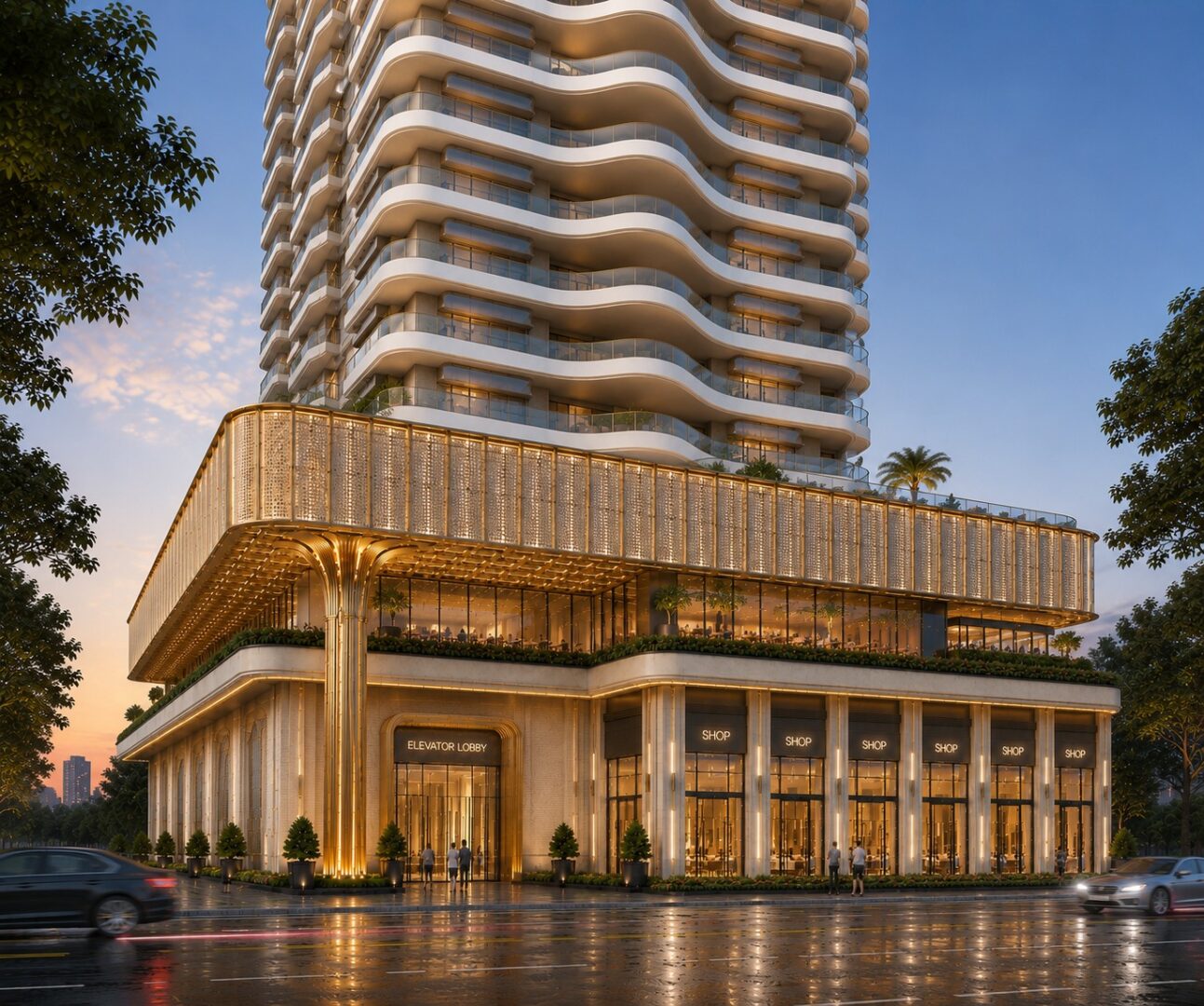
This supply squeeze is directly reflected in active market listings across Nairobi’s prime corridors. Azalea Heights (completed 3-bedroom + DSQ apartment, 2,292 sq ft) is currently listed at KES 25,000,000, while off-plan entry options at Amber Bay Heights start from KES 21,500,000 for a 3-bedroom layout.



What Buyers Want Now — And Why It Moves Prices
The report is unusually clear about where the premium sits. Buyers and tenants continue to favour gated communities over standalone homes — for security, but increasingly also for community, managed environments and lifestyle amenities. Young families and retirees are converging on the same product for different reasons.
Green space has become a pricing factor in its own right. Knight Frank notes buyers are “increasingly willing to pay a premium” for developments with substantial natural green areas, and that demand in such projects consistently outperforms comparable schemes without them — a preference now extending to high-rise developments that allocate real space to landscaping. Sustainability is following the same path: Muzi Salama in Tilisi is delivering over 200 IFC EDGE-certified green homes.
New launches tell the same story. Keza Laika by Mivida Homes, 156 Elara within Tatu City and the groundbreaking of Jabali Towers all lean into master-planned, amenity-rich living. In the apartment segment, demand is being carried by retirees downsizing, empty nesters leaving larger suburban homes, expatriates, and investors buying for rental income or a pied-à-terre.
The New Frontier: Tilisi, Limuru and the Satellite Belt
Among emerging locations, Knight Frank singles out the Tilisi/Limuru corridor, buoyed by the master-planned Tilisi development and its Special Economic Zone status. Upcoming projects include The Stables, a gated community, and a residential scheme by 17 Group. With the Waiyaki Way expansion toward Rironi prioritised and the tolled Rironi–Mau Summit highway planned, the effective distance between Limuru and the city is shrinking — and land there is still priced like the outskirts.
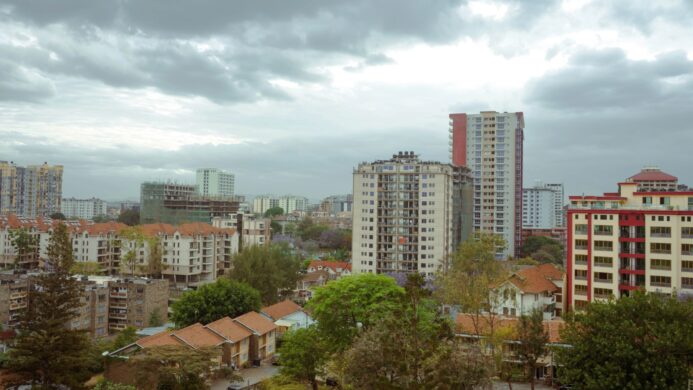
While satellite hubs like Tilisi offer long-term land potential, central residential nodes continue to capture immediate demand. To explore premier family homes and high-yield investment options in Nairobi’s prime core, view our KIilimani and Westlands neighbourhood guides.
Living in Kilimani, Nairobi: The Complete 2026…

Living in Westlands, Nairobi: The Complete 2026…
What This Means for You
If you are buying to live in. Waiting for a price dip in prime Nairobi has been a losing strategy for two years, and nothing in the H1 2026 data suggests that changes soon. Move quickly on quality, negotiate hard on stock that has sat, and treat a developer’s record of finishing projects as seriously as the show house.
If you are investing. A supply-constrained prime market is fundamentally a capital-preservation story. Rental growth is modest — 0.73% over the half — so buy for total return: location, tenant quality and the gated/green features that now demonstrably protect resale value.
If you are selling. This is the strongest pricing environment prime sellers have seen in several years, but buyers are informed. Well-presented homes in gated or green settings command the premium; overpriced listings still stale. Price from data, not hope.
If you are in the diaspora. A shilling that has held near KES 130 to the dollar for two years makes budgeting for a Nairobi purchase far more predictable than in 2023–24. We cover the financing picture — falling rates included — in a companion piece.
One buyer’s experience captures why stability matters as much as the rate itself. Mid last year, a Nairobi-based professional found a townhouse in Athi River priced right and structurally sound, but paused for two weeks to compare it against other listings and firm up financing. In that window, another buyer moved decisively and the unit was gone. The lesson she took away wasn’t about price — it was about certainty. With the shilling steady, she no longer had to factor in currency risk on top of everything else; the only variable left was speed of decision. On her next search, she pre-approved financing and set a firm walk-away price in advance, and when a comparable unit came up, she made an offer within 48 hours.
The Bottom Line
Nairobi’s prime residential market is rewarding decisiveness and punishing hesitation. The scarcity is real, it is measured, and it is concentrated in exactly the homes most people want. If a purchase is on your 2026–2027 horizon, the data argues for starting now — with your finances arranged and your shortlist sharp.
Thinking of buying or selling in prime Nairobi? Block walks you from shortlist to keys — valuations grounded in live market data, honest advice on what to pay, and negotiation on your side of the table. Talk to Loyd from Block on 0725 937 686 or [email protected].
Data: Knight Frank, Kenya Market Update — 1st Half 2026. Reproduction of report data with proper reference to Knight Frank Research.